About
My work sits at the intersection of ancient wisdom, modern psychology, and lived experience.
Many people think inner peace and happiness come from creating the right mix of external conditions. The best school. A great paying job. A good relationship. I used to think this as well.
But through time and experience I've learned what the great wisdom traditions have been saying all along...
My Path
I didn't plan on doing this work.
In my twenties, I moved to New York City to become an actor. For a long time my life was built around pressure, instability, and the constant feeling that I needed to hustle or prove something. The city can do that to you. I was chasing external circumstances, believing that if I could just get the right break, land the right role, finally arrive, then I'd feel okay.
What actually happened was different.
During a trip to Mexico, I found myself lying on a lounge chair, listening to the ocean, not doing anything particularly special. But my body softened in a way it hadn't in years. There was a quiet there—inside—that didn't depend on anything going right. It wasn't a dramatic awakening. More like a recognition. I remember thinking, very clearly: I want this peace all the time.
That moment changed the direction of my life. Not all at once, but in ways that have carried forward to this day.
I started practicing yoga. Then I trained to teach it. I became fascinated by the body—how it holds tension, how it learns patterns, how it communicates what the mind won't say. That led me to study anatomy seriously and eventually become a licensed massage therapist. For years I taught movement, anatomy, and mindfulness in New York City and abroad. I ran a yoga studio. I led a nine-month anatomy training for teachers.
At the same time, I was drawn deeper into Zen and Buddhist teachings. Later, I discovered modern psychological approaches like ACT and DBT, which gave me a different language for things I had been exploring on my own.
For a long time these felt like separate tracks—yoga over here, anatomy over there, mindfulness somewhere else, psychology in its own corner. I used to feel like I had to pick a lane. I tried, at different points, to choose one and leave the others behind. It never worked. Something was always missing.
Eventually I stopped trying to separate them. What I started to see was that these were all different ways of investigating the same thing: how we relate to our inner experience, and how that relationship shapes our lives. Not different paths. Different vocabularies for the same path.
My Work Today
Today my work is focused on helping people close the gap between what they understand and how they actually live.
This isn't about collecting more information. Most of us already have plenty of that. It's about learning to work with the body, the nervous system, and the patterns that live beneath our conscious intentions.
In practical terms, this means things like: developing a clearer awareness of your own thoughts and emotional habits, understanding what's actually happening in your body under stress, and building the capacity to pause and respond rather than just react. It's slow work, mostly. There aren't many shortcuts.
But over time, this kind of practice changes what's available to you in the moments that matter—not because you're trying harder, but because your system is learning something different.
A Note on Practice
A lot of people treat practice as something that happens in a special container. On a meditation cushion. At a yoga class. During a quiet morning routine. And that's fine as far as it goes. But the kind of practice I'm most interested in is the kind that carries into real life.
A difficult conversation.
A familiar habit loop you've been stuck in for years.
A moment of stress where everything in you wants to react the way it always does.
That's where practice either shows up, or it doesn't. That's where change actually happens.
What I Believe
I believe real change is possible. But I don't believe it comes from forcing ourselves to be different, or from shaming ourselves into better behavior. It comes from understanding how we work, and gradually learning to meet our own experience with more awareness, more steadiness, and more care.
I also believe this work isn't just personal. The way we relate to ourselves ripples out. It shapes how we show up with other people. It affects the kind of communities we build, the kind of conversations we have, and the kind of world we're creating.
For me, this includes a clear commitment to human dignity, inclusion, and compassion. Not as abstract values. As part of the practice.
A Personal Note
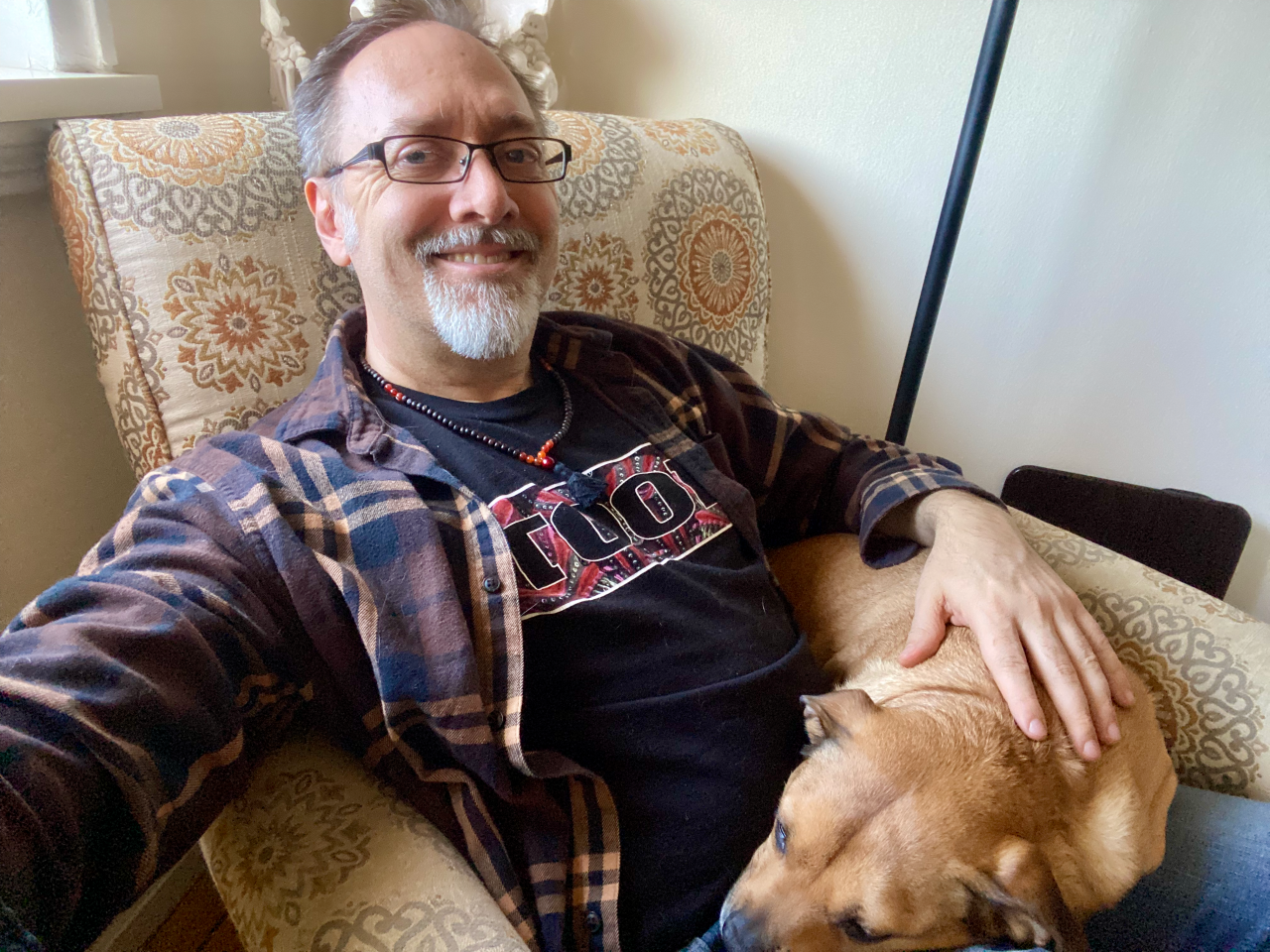
After many years in New York City, I now live in Montevideo, Uruguay with my aging mother, one of my young adult sons (the other is still in NYC), a dog and two cats. It's a full house and wonderful.
Life here is slower, quieter, and more spacious than anything I knew before. That shift has influenced my work in ways I'm still discovering. I practice yoga and meditation in the morning with a view of tree tops out the livingroom window, listen to audiobooks as I walk the dog around Parque Rodó, write and make short videos on the Rambla. I continue to learn and grow—imperfectly, honestly, trying to live the same principles I share with others.
If you've read this far, I hope something here resonated, or at least felt real and meaningful. Thanks for being here.
Where to Go From Here
If something here resonated, there are a few ways to explore further.
Read the writing
I share reflections, practices, and ways of working with these ideas in real life. You can find essays on the Writing page or join the email list to receive them in your inbox.
→ Join the Email List
Practice with others
Zenyasa Wellness is where this work becomes a lived, shared experience—through small-group coaching, mindful movement, and meditation.
→ Explore Zenyasa Wellness
For yoga teachers and professionals
I also train yoga teachers and movement professionals in the anatomy, philosophy, and nervous system practices that inform this work. If you're interested in continuing education or future trainings, you can join the teacher list for updates.
→ Join the Teacher List